

Why the Myths Are Costing You Time and Margin
Choose the wrong fabrication route and the consequences land squarely on your schedule and your margin.
Retooling costs, qualification delays, bottlenecks that push a launch back a quarter.
If you’re an engineer or procurement lead comparing advanced metal fabrication processes, the decision deserves better than received wisdom.
For 50 years, engineers have trusted us to solve the parts others can’t. We’re an SC21-accredited UK manufacturer and we’d rather you decided on data than assumption.
Myth 1: Chemical Etching Can’t Hold Tight Tolerances
The precision misconception persists, but it doesn’t survive contact with the numbers. For thin-gauge metal, chemical etching routinely holds tolerances of ±10% of material thickness and down to +/- 25 microns, with fine features and complex geometries reproduced reliably across a full run.
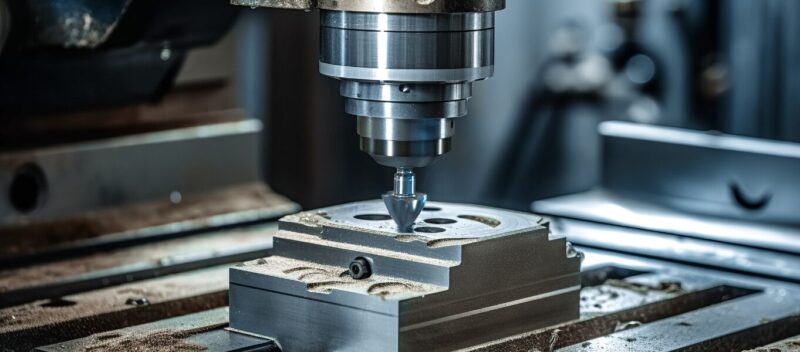
Crucially, the chemical etching process has no cutting tool to wear. Where stamping dies and milling tools degrade over thousands of cycles — slowly drifting tolerances out of band — etching delivers the same result on part one and part one million. That consistency is exactly what aerospace and medical applications demand.
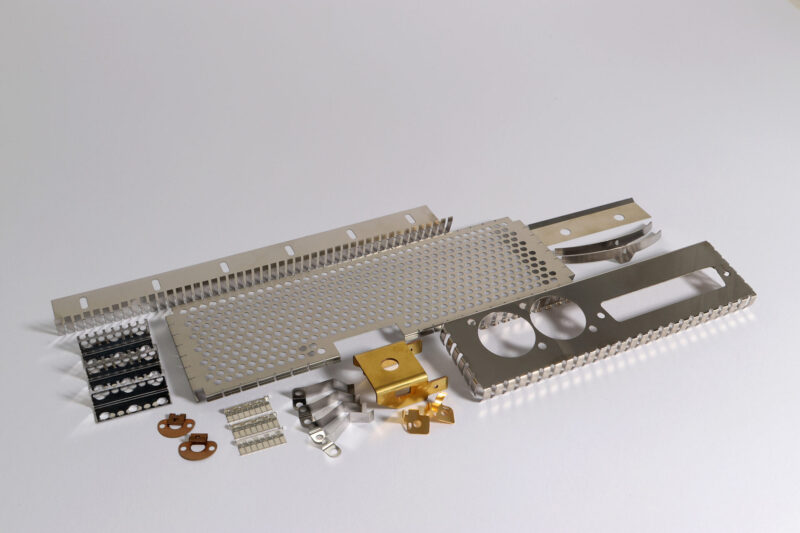
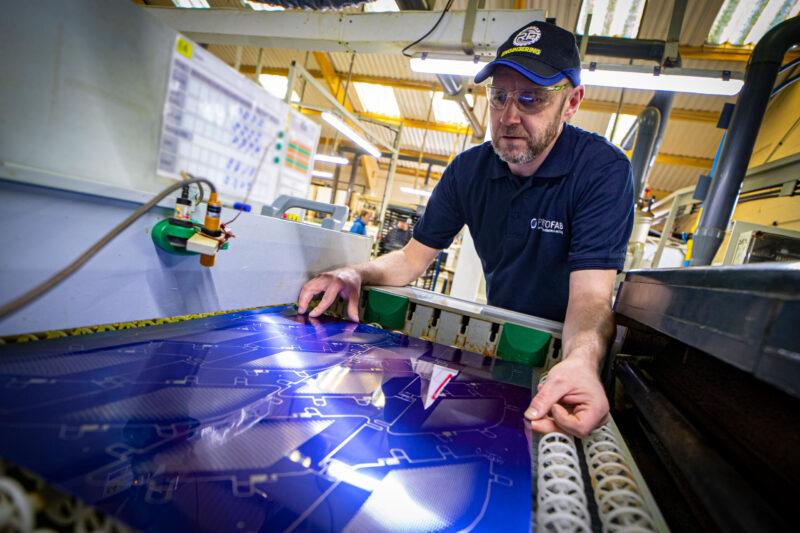
The design freedom is real too: intricate apertures, tight bridges and detailed profiles that would challenge mechanical methods are held repeatedly. The outcome is risk reduction — quality you can qualify once and trust thereafter.
Myth 2: It’s Only Good for Prototypes, Not Production
This one costs people the most. Etching is sometimes filed under “rapid prototyping” and forgotten when volumes rise — a misread of how the process actually scales.
The enabler is digital tooling. There’s no hard tooling commitment, so the same digital artwork that produced your first sample produces your hundred-thousandth part. You move from prototype to high volume without re-engineering anything. That’s supply chain innovation in practice: validate the design, then scale it without a process change or a tooling rebuild.
The commercial advantage is straightforward — lower upfront cost, faster iteration and shorter time to market. We see it daily across automotive sensors, electronics shielding and renewables components, where scalable production from a single validated design keeps both cost and risk down.
Myth 3: Laser Cutting Is Always Faster and Cheaper
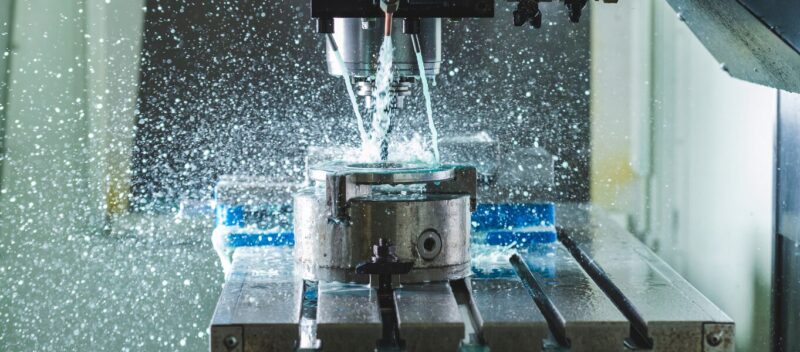
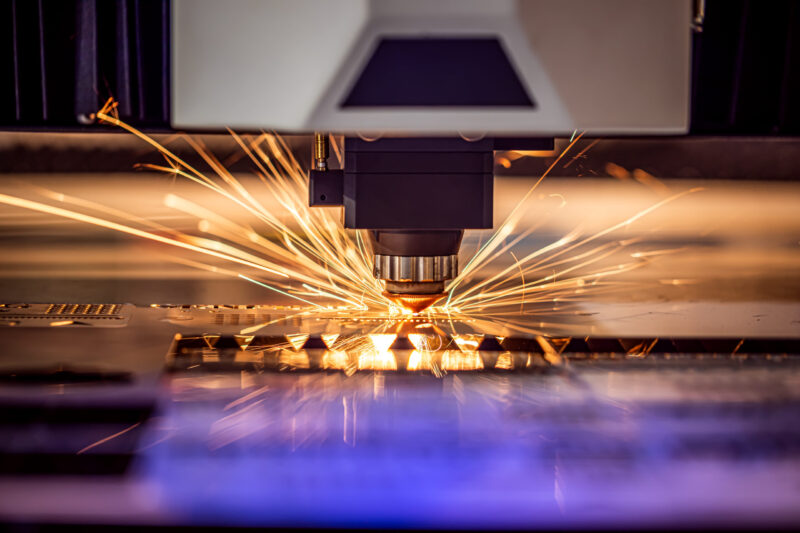
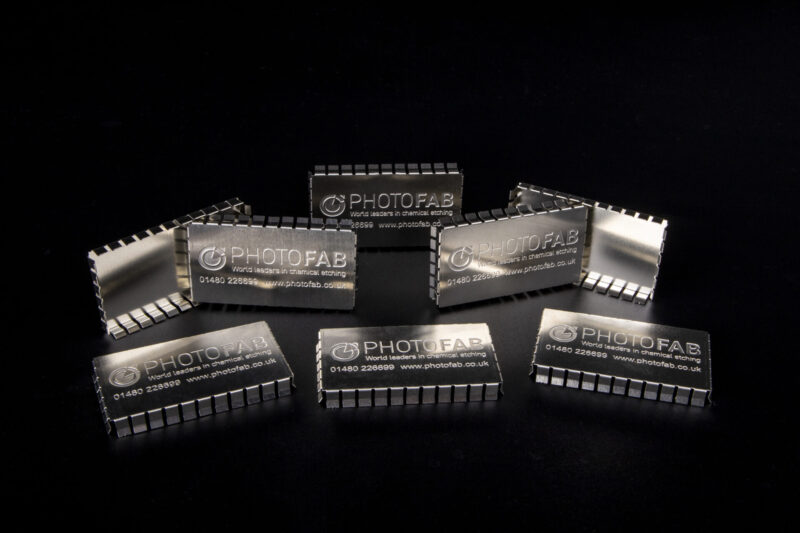
Lasers are excellent for the right job. So let’s be honest about where each process wins. A laser cuts one part at a time and introduces a heat-affected zone, edge stress and, often, a deburring step. Etching processes an entire sheet of features simultaneously, with no mechanical or thermal stress, producing burr-free, stress-free parts.
That difference reshapes the economics. As feature count and part density per sheet rise, etching’s parallel approach pulls decisively ahead on cost-per-part — while delivering clean edges with no secondary finishing.
And speed isn’t the laser’s exclusive territory: we move from CAD to part in 24 hours when you need it. For procurement, the right comparison is total cost of ownership — finishing, scrap and stress effects included — not headline cut speed alone.
Myth 4: “Etched Parts Have Compromised Material Integrity”
The opposite is true, and it’s the heart of the case for chemical etching. Because material is dissolved away rather than cut, punched or burned, there’s no mechanical stress, no burr formation and no heat distortion. The metal’s grain structure and properties are preserved.
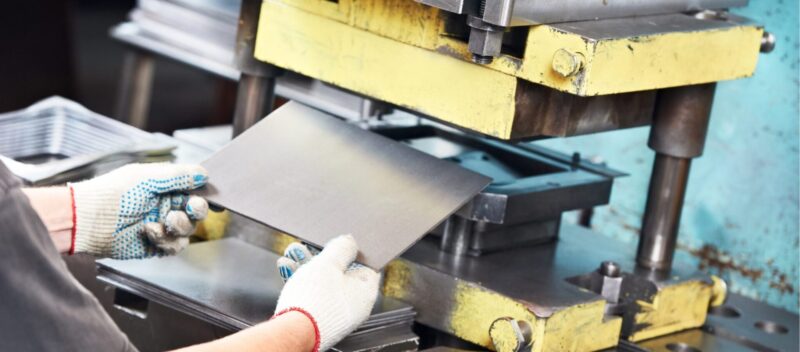
Contrast that with stamping, where punching work-hardens the material and can deform thin sections — a real concern for safety-critical parts. Chemical milling leaves you with flat, clean, stress-free components every time.
That integrity is precisely why etched parts suit aerospace, defence and medical components, where a hidden stress concentration is unacceptable. The downstream benefit is dependable quality that reduces inspection burden and the risk of rework.
Myth 5: Switching Processes Is High Risk and Disruptive
Change feels risky when a programme is already running. But for technical directors and operations leads, the disruption is smaller than the status quo’s hidden costs.
We act as a specialist partner that de-risks the transition. CAD to part support means you don’t carry the engineering load alone. Because digital tooling allows rapid iteration with no hard tooling commitment, you can produce before you invest — proving the part in metal before committing to volume.
Our UK manufacturing base, SC21 accreditation and dependable turnaround are themselves risk reduction: a qualified, accountable source close to home. Engineers regularly tell us they’ve validated complex designs in days rather than the weeks a tooled route would demand.
Make the Decision on Evidence, Not Assumption
The realities are clear. Etching holds tight tolerances, scales economically from prototype to high volume, competes hard on total cost, preserves material integrity and lowers transition risk. Taken together, that makes photo chemical etching PCE a genuine strategic advantage for precision, speed and scalable production.
So test it against your own data. Validate complex designs in days, with parts from CAD in 24 hours.